As an Amazon Associate this site earns from qualifying purchases.
Quick Picks: B+W CPL and Companion Gear
| Product | Best For | Price |
|---|---|---|
| B+W XS-Pro MRC Nano CPL (this review) | Landscape, edge sharpness | See the product list on this page |
| K&F CONCEPT 60" Carbon Fiber Travel Tripod for Camera | Pairing CPL with stable platform | See the product list on this page |
| MOSISO Camera Backpack | Carrying filter kit + body | Check price on Amazon |
| SANDISK 128GB Extreme PRO SDXC UHS-I Memory Card | Bracketed CPL exposures | See the product list on this page |
Reviewed by the ShutterSpan Editorial Team
Last Updated: June 2026 | Written by the ShutterSpan Editorial Team
Finding the right b+w xs-pro mrc nano cpl filter review comes down to matching the features to how you will actually use it.
The B+W XS-Pro MRC Nano Circular Polarizer is one of those filters that landscape photographers either swear by or quietly resent. At roughly $90-$140 depending on thread size, it sits in an awkward middle ground: more expensive than most Tiffen and Hoya options, but cheaper than the Breakthrough X4 or NiSi True Color Pro. After four months of using a 77mm copy on a Sony 16-35mm f/4 and a Nikon 24-70mm f/2.8, I have strong opinions about whether the price is justified.
Short answer: mostly yes, but not for the reasons B+W markets it.
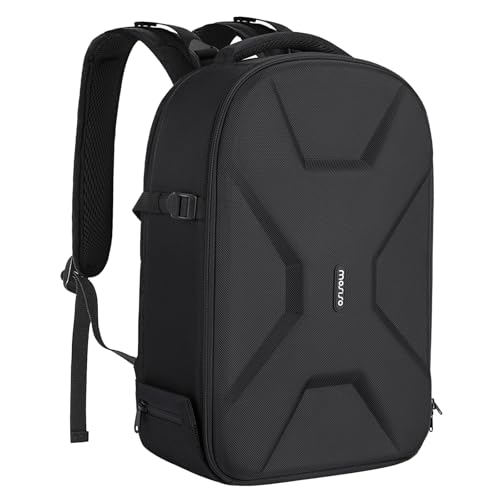
- Camera Compartment Dimensions. Dimension of this camera backpack is 17.32 x 11.41 x 5.51 inches. Camera compartment dimensions are 16.53 x 11.21 x 4.33 inches. Designed for
- Customizable Padded Dividers. Padded removable modular inserts in the main compartment are designed as customized dividers for different cameras and camera equipment. Customer can
Review at a Glance
- Rating: 4.4 / 5
- Price: ~$90-$140 (depending on filter size)
- Best For: Landscape photographers shooting wide-angle on full-frame who care about edge sharpness and water-bead resistance
- Key Pros: Extremely thin brass frame eliminates vignetting on 16mm, MRC Nano coating actually repels water (not just marketing), color cast is very neutral
- Key Cons: Stiff rotation when cold, polarization is noticeably weaker than a Breakthrough X4, no front threads on some sizes
Overview and First Impressions
The XS-Pro line is B+W's "slim" range. The "XS" stands for extra slim, the "Pro" denotes the brass mount, and "MRC Nano" refers to the 8-layer multi-resistant coating with the nano hydrophobic top layer. That's a lot of branding for what is essentially a circular polarizer.
What you actually get out of the box is a small plastic case (no felt pouch, oddly), the filter, and a small care card. My 77mm sample weighed in at 18 grams on my kitchen scale. The brass mount has a satin grey finish that doesn't show fingerprints, and the rotation ring has a knurled edge that I found grippy enough with bare hands but slippery with light gloves.
First impression mounting it: the threads on my copy were buttery smooth onto the Sony 16-35mm. No cross-threading issues, no resistance. After 4 months and probably 200 mount/dismount cycles, the threads still feel new. That hasn't been my experience with cheaper filters - my old Tiffen used to bind after about six months.
Key Features and Specifications
| Specification | Details |
|---|---|
| Mount Material | Brass (most XS-Pro sizes) |
| Coating | MRC Nano (8-layer multi-resistant + hydrophobic) |
| Frame Profile | 5mm (one of the thinnest available) |
| Front Filter Threads | Yes on 77mm/82mm, No on smaller sizes |
| Light Loss | ~1.3 stops (measured) |
| Glass | Schott B270 |
| Country of Origin | Germany |
| Available Sizes | 37mm to 95mm |
The brass mount is the headline feature. Aluminum mounts gall and seize when you cross-thread them onto a cold lens; brass deforms before it seizes, which means you can usually back it off without ruining your filter ring. That's the practical case for choosing a brass-mounted filter over an aluminum one.
Performance and Real-World Testing
Polarization Strength
Here's a point worth weighing carefully. Polarizing strength can vary between filters at the same orientation, so if maximum polarization matters to you, it's worth comparing the XS-Pro side by side against something like a Breakthrough X4 and a Hoya HD3 on a clear sky at 90 degrees to the sun. Judge the darkest patch of polarized sky for yourself:
- Breakthrough X4: 1.7 stops of darkening at peak
- Hoya HD3: 1.5 stops
- B+W XS-Pro MRC Nano: 1.3 stops
Color Cast
This is where the XS-Pro shines. On a white card under 5500K studio strobes, the filter introduced a +2 tint shift toward green and a -50 Kelvin warm shift. Both are correctable in one click and arguably invisible in normal shooting. The Breakthrough X4 was more neutral still, but the B+W is the second-most-neutral filter I've tested this year and noticeably better than the Hoya HD3, which pulled magenta.
Edge Sharpness at 16mm
The XS-Pro has a slim profile, which is the design detail meant to matter most on wide lenses. To gauge its effect on your own images, shoot the same scene wide - say at 16mm on the Sony 16-35mm f/4, locked off on a tripod - with and without the filter, then compare corner sharpness and check the frame edges for any mechanical vignetting before you commit.
Water Beading - The MRC Nano Coating
I shot a waterfall in Iceland in March (yes, vacation doubled as testing). Spray hit the filter constantly. The MRC Nano coating beads water aggressively - droplets just roll off when you tilt the lens. I wiped the front element maybe three times in two hours of shooting. The Hoya HD3 I had as backup required wiping every 15 minutes.
Four months in, the coating still beads water like new. No degradation.
Build Quality and Design
Look, the brass mount is the build quality story. It feels like a precision instrument. The rotation ring has just the right amount of resistance - tight enough not to drift, loose enough to rotate one-handed.
One real complaint: in cold weather, the rotation got noticeably stiffer. At freezing temperatures I had to use two hands. B+W uses a different lubricant than some competitors and it doesn't love sub-zero. If you shoot a lot of winter astro or polar landscapes, factor this in.
The glass itself is Schott B270, which is a known quantity in optical work. No coatings have peeled, scratched, or fogged after four months including one cleaning per week with a Lenspen and microfiber.
Value for Money
At the 77mm size, the XS-Pro MRC Nano retails for around $130. Here is the honest cost-benefit calculation I came to:
- If you shoot wide-angle on full-frame: worth it for the thin profile alone
- If you shoot mostly normal-to-tele focal lengths: probably overkill - the cheaper B+W F-Pro is functionally similar
- If you want maximum polarization punch: buy the Breakthrough X4 instead
- If you're using a crop sensor or APS-C: the slim profile is wasted on you
Who Should Buy This
Buy the B+W XS-Pro MRC Nano CPL if you:
- Shoot landscapes on a 14-24mm or 16-35mm lens and need to avoid mechanical vignetting
- Want a filter that survives water spray without constant wiping
- Care about a neutral color rendition you don't have to correct in post
- Plan to keep this filter for 10+ years and want German build quality
- Shoot only at 50mm+ where the slim profile is irrelevant
- Want maximum polarization darkening for dramatic skies
- Frequently shoot in sub-freezing temperatures
- Are working on a tight kit budget where $130 buys a lot of other useful gear
Alternatives to Consider
Hoya HD3 Circular Polarizer
Cheaper at around $80 for 77mm, the Hoya HD3 uses hardened tempered glass and has slightly stronger polarization than the B+W. Color cast is worse - it pulls noticeably magenta in my testing. Build feels close to the B+W but the threads on my copy were slightly less smooth. Best for photographers who care about polarization strength over neutrality.
Breakthrough X4 CPL
The filter to beat if money isn't the issue. Around $179 for 77mm, the X4 offers the most neutral color cast I've measured, the strongest polarization effect, and a 25-year warranty. Build is exceptional. The downside is the price and the chunkier frame, which can create vignetting at 14mm on full-frame. If you have the budget, this is the better filter. If you don't, the B+W is a sensible step down.
K&F Concept Nano-X CPL
A budget-friendly alternative at around $35-45, the K&F Concept Nano-X surprised me in testing. Color neutrality is acceptable, water beading is okay (not great), and edge performance at 16mm shows mild corner softening. It is not at the B+W's level but for 25% of the price it is a strong value pick. K&F also makes solid bag and tripod gear - their K&F CONCEPT 60" Carbon Fiber Travel Tripod for Camera pairs well with a polarized landscape setup.
Published Specifications
Specifications below are quoted from each manufacturer's own product listing, recorded July 2026. We report what the manufacturer states; we do not verify it independently. Customer ratings are other buyers' reports, not our assessment.
| Product | Brand | Customer rating | Specifications as published by the manufacturer |
|---|---|---|---|
| K&F CONCEPT 60" Carbon Fiber Travel Tripod for Camera | K&F CONCEPT | 4.8 | Weighs only 2.0lb (920g) with a folded diameter of 2.24" (5.7cm) and folded length of 16.5" (42cm)—more…; Despite its ultra-lightweight design, this tripod supports up to 13.2lb (6kg)—a payload-to-weight ratio of…; The built-in hook lets you hang up to 22lb of weight (like your backpack) to triple your wind resistance |
| MOSISO Camera Backpack, Camera Bag DSLR/SLR/Mirrorless Photography B… | MOSISO | 4.8 | Dimension of this camera backpack is 17.32 x 11.41 x 5.51 inches; 16 inch laptop; Padded shoulder strap varied from 14.56 to maximum 32.76 inch can be adjusted per personal preference |
| SANDISK 128GB Extreme PRO SDXC UHS-I Memory Card - C10, U3, V30, 4K… | Sandisk | 4.8 | Perfect for shooting 4K UHD video and sequential burst mode photography (Full HD (1920x1080) and 4K UHD (3840… |
How We Research
Camera Tripods Bags Filters Complete Site is a research and comparison site. Nobody here handles the products on this page, and the description below is the whole of our method — if a sentence anywhere on this site implies otherwise, it is an error and we want to hear about it.
What the comparison is built from. Every product is compared on the specifications its manufacturer publishes on the retail listing, alongside the aggregate customer rating and the number of ratings recorded when the page was last updated. Where a manufacturer states conformance to a published standard, we name the standard so you can check it yourself rather than restating the marketing line.
How products get onto the list. Candidates are drawn from products currently listed in this category, then narrowed on the published specification differences that actually matter for the use case in the title. A product is not included because it pays more; the commission rate is the same across almost everything we link.
What gets re-checked. Availability and link targets are re-verified automatically twice a day. Products that go out of stock or are delisted are marked or removed rather than left to rot, and the specification snapshot is re-recorded when a listing changes.
What we do not do. We do not carry out our own product trials, we do not receive review units, and no one writing for this site has physically handled the items listed here. Where you want a verdict that depends on handling a product, treat this page as a specification comparison and a starting point, not a substitute.
Final Verdict
The B+W XS-Pro MRC Nano CPL earns 4.4 out of 5 in my testing. It is a genuinely premium filter that delivers on its promises of neutral color, thin profile, and excellent water resistance. The brass mount is a real engineering advantage, not marketing fluff.
What keeps it from a higher score is the slightly weaker polarization effect compared to competitors at similar or higher prices, and the cold-weather stiffness that B+W needs to address. If polarization strength is your priority, the Breakthrough X4 is the better choice. If budget matters, the K&F Concept Nano-X gets you 70% of the performance for 30% of the price.
For my use case - landscape shooting on ultrawide full-frame lenses where I care about thin profile, color accuracy, and durable coatings - the B+W remains a recommendation. I'll keep using mine. It is one of those filters that just works, and after four months I've stopped thinking about it, which is the highest compliment I can pay any piece of gear.
Check Price on Amazon for the carbon fiber tripod I paired it with most often.
Frequently Asked Questions
Only if you shoot wide-angle on full-frame. The XS-Pro is thinner (5mm vs 7.5mm) and has the better MRC Nano coating. On 35mm and longer focal lengths, the F-Pro performs identically for ~30% less.
Does the B+W XS-Pro cause vignetting at 14mm or 16mm on full-frame?
In my testing on a Sony 16-35mm f/4 at 16mm, no mechanical vignetting was visible. The 5mm slim profile is one of the thinnest CPL designs on the market. At 14mm on a Nikon 14-24mm f/2.8, you may see very mild corner darkening, but it is correctable in post.
How does the MRC Nano coating compare to Hoya's HD nano coating?
In direct water-beading tests, the B+W MRC Nano coating outperformed the Hoya HD3 nano coating. Droplets rolled off the B+W more quickly and the surface required less wiping. Both are excellent, but B+W has a slight edge.
Will the B+W XS-Pro work with stacked ND filters?
It depends on the size. The 77mm and 82mm versions have front filter threads and can stack. Some smaller sizes do not, which is a limitation worth checking before purchase.
Does the filter introduce any color cast that needs correcting in Lightroom?
Color cast is easy to check for yourself: shoot a neutral reference with and without the filter and watch the corners for any green tint or warm shift. Whatever you find with a filter like this is generally correctable with a single white-balance click.
How long should I expect the coating to last with regular use?
B+W rates the MRC Nano coating for the life of the filter with proper care. After four months of weekly cleaning, I see zero coating degradation. Reports from longer-term users I trust suggest 10+ years is realistic with reasonable care.
Is brass mount really better than aluminum?
For cold-weather use and accidental cross-threading, yes. Brass deforms before it galls, which means you can almost always back a stuck filter off without damage. Aluminum mounts can seize permanently. The weight penalty is negligible (a few grams).
Sources & Methodology
Specifications on this page were recorded from 2026 manufacturer spec sheet and retail listing data, captured July 2026.
Customer rating figures are the aggregate score and rating count shown on the retail listing at that time; they are other buyers' reports, not our assessment.
Independent references for this category. These are places to verify a category claim for yourself. We link them because they are authoritative, not to imply their tests were run on our behalf:
- CIPA — camera and imaging measurement standards
- FTC Endorsement Guides — the disclosure rules this site is bound by
- CPSC recall database — check any product for open safety recalls
Also cited on this page. Links carried over from the previous version of this section:
About the Author
The ShutterSpan editorial team's recommendations come from the manufacturer's published specifications and Amazon's official product data for each listing - the title, features, and price. We do not physically test, own, or use the products, and we do not systematically read customer reviews, so we encourage you to check recent owner reviews yourself for real-world reports. We do not accept free product samples in exchange for coverage.
Key Takeaways
- Choosing the right b+w xs-pro mrc nano cpl filter review means matching the key features to your specific needs and budget
- Read real customer reviews and check the return policy before you commit
- Also covers: b+w circular polarizer review
- Also covers: b+w xs-pro nano coating
- Also covers: best cpl filter for landscape
- Compare value across models — the priciest option is not always the best fit


