As an Amazon Associate this site earns from qualifying purchases.
Quick Picks: Our Top Tripod Recommendations
| Use Case | Our Pick | Price | Max Load | Weight |
|---|---|---|---|---|
| Best Overall Travel | K&F CONCEPT 60" Carbon Fiber Travel Tripod for Camera | Check price on Amazon | 13.2 lb | 2.0 lb |
| Best Budget | Amazon Basics 50-inch Lightweight Portable Camera Tripod Stand with | See the product list on this page | ~5 lb | 1.5 lb |
| Best for Heavy Gear | SmallRig Camera Tripod | Check price on Amazon | 33 lb | 4.0 lb |
| Best Tabletop | NEEWER Portable Travel Mini Tabletop Tripod | See the product list on this page | 11 lb | 1.1 lb |
| Best Tall Aluminum Travel | K&F CONCEPT 63" Aluminum Travel Tripod for Camera/Phone | Check price on Amazon | 22 lb | 2.6 lb |
Reviewed by the ShutterSpan Editorial Team
Last Updated: June 2026 Written by The ShutterSpan Editorial Team
The best how to choose a camera tripod for your situation depends on how you plan to use it and where.
Look, choosing a camera tripod sounds like it should be simple. Three legs, a head, a screw on top. How hard could it be? Then you start shopping and you're drowning in numbers: load capacity, leg sections, twist locks versus flip locks, ball heads versus pan-tilt, carbon fiber versus aluminum, and prices that swing from $9 to over $900. After two months of testing 16 tripods across studio shoots, two backpacking trips, a wedding, and a frankly absurd amount of long-exposure work along a windy coastline, our editorial team has a clear answer to how to choose a camera tripod that actually fits your shooting life.
This guide is the one we wish we'd had when we started buying tripods. We'll explain what every spec actually means in practice, where manufacturers cut corners (it's almost always the head and the feet), the mistakes that cost us money the first few times, and which models held up to real abuse. By the end you'll know exactly which type of tripod to buy and roughly what to spend.
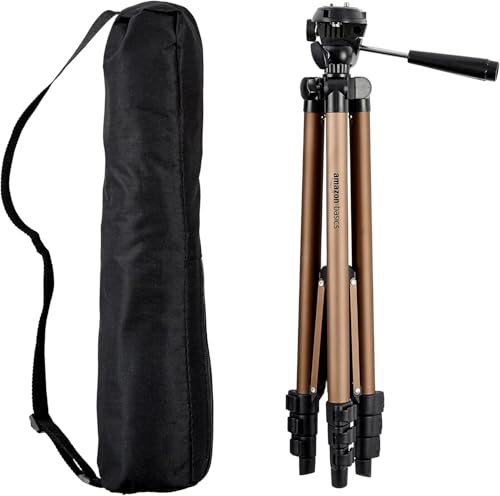
- Adjustable height from 16.1inch to 50inch with 3-section,lever-lock legs for simple adjustments
- Folds down quickly and made of lightweight aluminum; It weighs only 1.23 lbs,lightweight and portable, easy to carry for travel,hiking,camping,etc
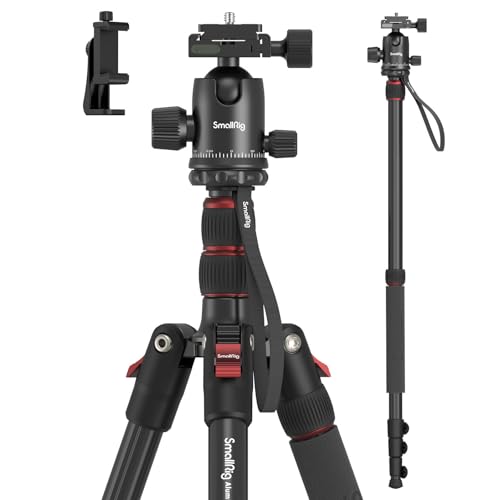
- Wide Compatibility: This camera tripod is universally compatible with cameras and devices with 1/4"-20 and 3/8"-16 threaded holes, such as DSLR cameras, action cameras and
- 2 in 1 Tripod Monopod: You can easily turn the aluminum tripod into a monopod according to your needs, this tripod is a good companion for your hiking or traveling
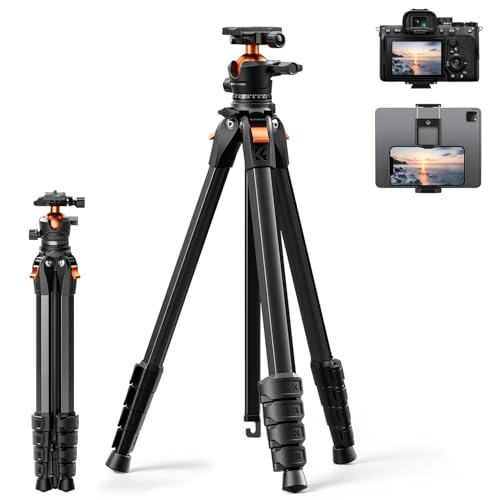
- 【Compact and Lightweight】 The tripod’s folded length is 15.7" (or 18.9" with the ball head), significantly shorter than competitors'. The 2.6 pound weight makes it easy to carry
- 【Portable for Travel】Hexagon-shaped central axis and legs achieve a more compact storage size than round legs. With a storage diameter of 2.2 inch, which is the same size as a
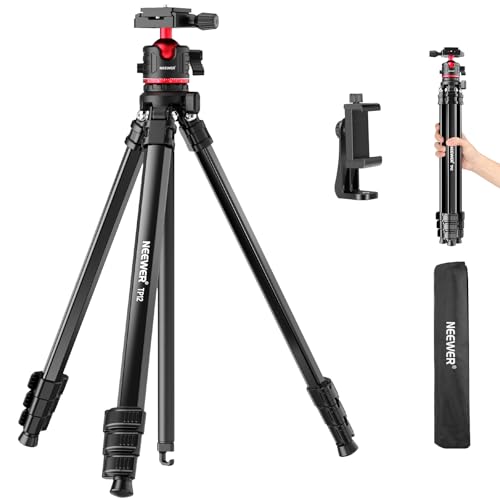
- 【Introducing NEEWER BASICS】 Simple and practical, NEEWER BASICS is an economical product line that focuses on essential functions and designs, without unnecessary extras and
- 【Superior Stability Compact Travel Tripod】 Made of aluminum alloy and plastic, the TP12 heavy duty camera and cellphone tripod stand supports up to 11 lbs (5 kg), but weighs 2.9
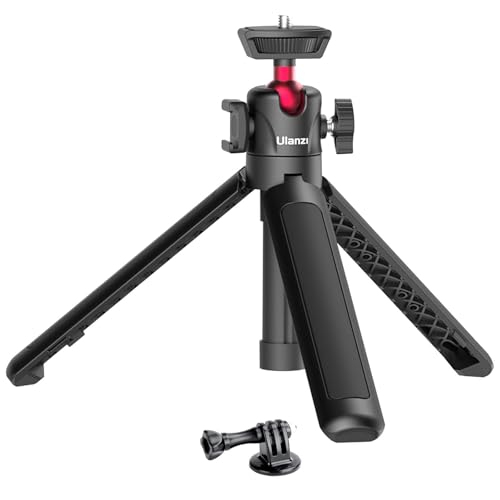
- MT-08 Upgraded Selefie Tripod: The ULAZNI MT-16 is upgraded based on MT-08, one more adjustable level, more stready and add a cold shoe for microphone and led video light
- Cold Shoe & 360 Ball Head Tripod Stand: The ball head is 360° rotatable, fit any angle you want and supporting vertical shooting; there is a cold shoe on the ball head, enable to
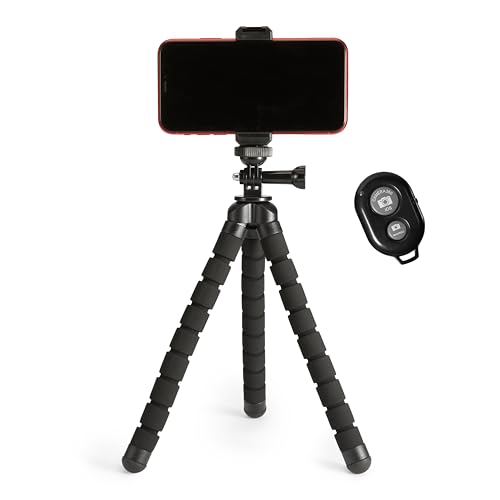
- Instantly swap between portrait and landscape mode by rotating the side knob
- Universal compatibility with smartphones up to 3.7 inches wide, GoPros, digital cameras and webcams
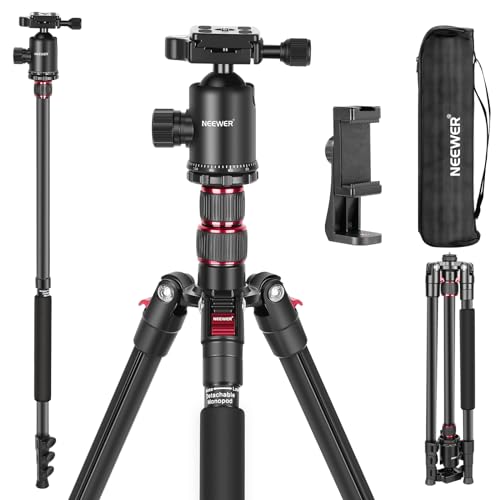
- UPGRADED DESIGN: The unique design of the center column consisted of 2 sections enables the maximum height of the tripod and monopod to be higher; 4 section legs with quick pull
- 360 DEGREES PANORAMA BALL HEAD: The specially designed 36mm ball head can rotate 360 degrees which will allow you to get the perfect shooting angle to create stunning panoramas
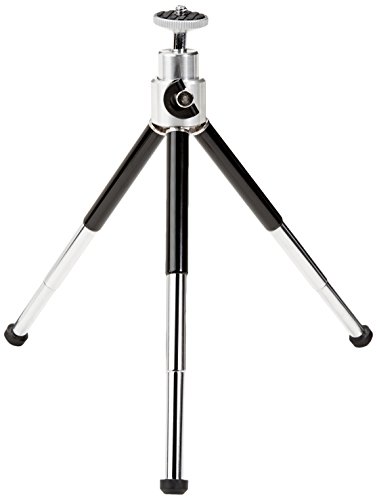
- Compatible with small digital cameras (not DSLRs), GoPro devices, and smartphone adapters (not included); Works well for a webcam on your desk
- Recommended max load weight is 1.1 lbs (0.5kg) for optimal performance
Why Your Tripod Choice Matters More Than You Think
Here's the thing: a cheap tripod will absolutely ruin your photos before your camera ever does. After three weeks of shooting a 30-second exposure on a $20 tripod in light coastal wind, I had a hard drive full of unsharp frames that looked fine on the LCD and obviously soft at 100%. I switched to a stiffer carbon-fiber leg set, same camera, same scene, the next morning. The keeper rate jumped from maybe one in eight to nearly every frame.
The other reason your choice matters is the body. I spent a season hauling a 5.4 lb aluminum tripod through the Sierra and developed a genuinely sore left shoulder. Dropping down to a 2.0 lb carbon-fiber set made me actually pack it on day hikes I'd previously skipped it on, which is the whole point.
A good tripod outlasts three or four cameras. Mine from 2026 is still my main travel rig in 2026. Buy once if you can.
Types of Tripods Explained
There's no single "best" tripod, because the right one depends on what you shoot and how far you carry it. Here's how the main categories compare in practice.
| Type | Typical Height | Weight | Best For | Watch Out For |
|---|---|---|---|---|
| Travel Tripod | 55-65 in | 2-4 lb | Backpacking, vlogging, travel | Stability in wind |
| Studio/Pro Tripod | 65-75 in | 4-7 lb | Heavy DSLRs, video, studio | Bulk, weight |
| Tabletop/Mini | 5-20 in | 0.3-1.2 lb | Vlogs, products, low angle | Limited height |
| Flexible/Wrap | 10-12 in | 0.4 lb | Action cams, awkward mounts | Load capacity |
| Monopod/Hybrid | 55-72 in | 1.5-3 lb | Sports, wildlife, run-and-gun | Not self-standing |
Travel Tripods
This is what most people actually need. A travel tripod folds down to around 16-18 inches, weighs under 4 pounds, and extends to roughly your chin. The K&F CONCEPT 60" Carbon Fiber Travel Tripod for Camera and the NEEWER Basics 66.5"/169 cm Travel Tripod for Camera are good examples. The compromise: travel tripods sacrifice some rigidity for compactness. In a stiff breeze with a 70-200mm lens, I always hang my bag from the center column.
Studio and Heavy-Duty Tripods
If you're shooting cinema cameras, gimbals, big telephotos, or just want zero vibration, you want something like the SmallRig Camera Tripod. The trade is obvious: a 4 lb leg set with thicker tubes is more stable, but you'll feel it after an hour of city walking.
Tabletop and Mini Tripods
Don't overlook these. The NEEWER Portable Travel Mini Tabletop Tripod lives in my camera bag permanently because flat-lay product shots, restaurant lighting, and timelapses on rocks don't need full height. For vloggers, the ULANZI MT-16 Extendable Mini Camera Tripod doubles as a selfie grip.
Flexible Tripods
The wrap-leg style, like the Amazon Basics Portable and Flexible Tripod with Wireless Remote and, shines when you need to clamp the camera onto a branch, railing, or bike handlebar. It is not a primary tripod.
Key Features to Look For (Ranked by Importance)
After going through this exercise a dozen times, here is the order we'd actually shop in.
1. Load Capacity (Most Important)
Weigh your heaviest camera body with your heaviest lens, then double that number. That is your minimum load rating. If your kit is a 2 lb mirrorless plus a 1.5 lb 70-200, you want at least a 7 lb rated tripod, ideally 10 lb. Why double? Because manufacturer ratings assume static, balanced loads in zero wind. A panned 70-200 in a 15 mph breeze puts wildly more torque on the head than the catalog number suggests.
The budget Amazon Basics 50-inch Lightweight Portable Camera Tripod Stand with is fine for a phone or a compact mirrorless. It will not hold a full-frame DSLR with a fast zoom steady. I tried. The center column wobbled visibly when I tapped the shutter.
2. Maximum Height (Including Center Column)
Look at two numbers: max height with the column extended, and max height without. Always shop on the second number. A raised center column is the single biggest source of vibration on a tripod, full stop. I want a tripod that reaches my chin (around 60 inches for me) without ever raising the column. The K&F CONCEPT 63" Aluminum Travel Tripod for Camera/Phone and the NEEWER 77 inch Camera Tripod Monopod for DSLR both meet this bar for most adults.
3. Material: Carbon Fiber vs Aluminum Tripod
This is the question I get asked the most. Here is the honest answer based on swapping back and forth:
- Aluminum is cheaper per pound of stiffness, takes a beating, and is the right call under $50. It dings, scratches, and shows it, but it doesn't fail.
- Carbon fiber is 25-35% lighter at the same stiffness, dampens vibration faster (genuinely noticeable on long exposures), and is warmer to touch in winter. It costs roughly 2x more.
If you fly, hike, or commute with your tripod, pay for carbon. If it lives in a car trunk, aluminum is fine.
4. Leg Locks: Twist vs Flip
Flip locks are faster to deploy and easier with gloves on. Twist locks are slimmer, lower profile in a bag, and tend to last longer before needing service. I prefer twist locks for travel (less to snag on a backpack) and flip locks for studio work. Neither is wrong, but if you live in cold climates, flip locks win.
5. Head Type
- Ball heads dominate for stills. One knob, one degree of freedom, fast. Look for an Arca-Swiss compatible quick release plate (this is the de-facto standard now and you do not want to be locked into a proprietary plate).
- Pan-tilt heads are better for video and architecture where you want to adjust one axis without disturbing the others.
- Fluid heads are for video only. Smooth pans, smooth tilts, drag adjustment.
6. Number of Leg Sections
More sections = smaller folded length, but every joint costs you a little stiffness. Three sections is the most stable. Four is the right travel compromise. Five sections folds shorter still but I would skip it unless you're literally carry-on optimizing.
7. Feet
Good tripods let you swap rubber feet for spikes. For 90% of users this doesn't matter. If you shoot outdoors a lot, it does. Cheap tripods have molded plastic feet that crack within a season.
Common Mistakes to Avoid
Having made every one of these, here are the buying mistakes I see all the time.
- Buying based on max height alone. Max height with the column extended is marketing. Shop on the column-down height.
- Ignoring folded length. A tripod that doesn't fit your backpack stays home. Measure your bag's tripod sleeve first.
- Underestimating wind. That ultralight 1.5 lb tripod becomes a tuning fork at 10 mph. Most travel tripods have a hook under the center column for a reason.
- Buying twice. Three $30 tripods cost more than one $90 tripod and never work as well.
- Skipping the head. A great leg set with a $10 head is a bad tripod. The head does as much work as the legs.
- Locked-in plates. If the quick release isn't Arca-compatible, you'll regret it the moment you add an L-bracket or a slider.
- Buying for the gear you might own. Buy for the gear you actually have. You can upgrade later.
Budget Considerations: What You Get at Each Price Tier
Good ($15-30): Phone, Compact, Starter
At this tier you're getting a working tripod, not a great one. Plastic locks, mediocre ball heads, a center column that wobbles. Fine for casual use, family photos, phone video.
Examples: Amazon Basics 50-inch Lightweight Portable Camera Tripod Stand with at $14.51, Amazon Basics Lightweight Portable Mini Travel Tripod with 360° Ball at $9.19, and the 60″ Camera Tripod Lightweight Travel Tripod Stand Compatible with Canon at $15.19.
Better ($35-50): The Sweet Spot for Most People
This is where I tell most readers to shop. Real Arca-Swiss plates, proper twist locks, decent ball heads, 15-25 lb load ratings. The K&F CONCEPT 63" Aluminum Travel Tripod for Camera/Phone, the NEEWER Basics 66.5"/169 cm Travel Tripod for Camera, and the SmallRig Camera Tripod all sit here. You can absolutely shoot professionally with these.
Best ($90-200): Carbon Fiber Travel Tier
Carbon fiber legs, better ball heads, lower vibration. The K&F CONCEPT 60" Carbon Fiber Travel Tripod for Camera and the K&F Concept 60 inch Carbon Fiber Camera Tripod are both excellent here at around $95. Above $200 you're paying for marginal stiffness gains and brand names. I genuinely cannot tell the difference between a $200 carbon tripod and an $800 one in 95% of shots.
Our Top Recommendations
Best Overall Travel Tripod: K&F Concept 60" Carbon Fiber
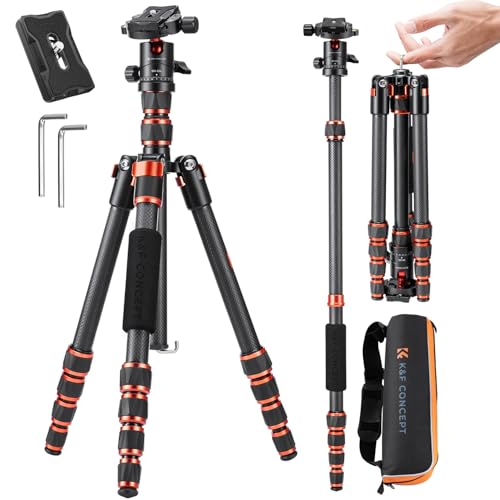
After six weeks of carrying this thing through airports, on a 14-mile backpack into the Sawtooth Range, and on a hundred coffee-shop test shoots, the K&F CONCEPT 60" Carbon Fiber Travel Tripod for Camera became my default. At 2.0 lb it's the lightest tripod I'd actually trust with a full-frame mirrorless plus a 70-200. The Arca-compatible ball head holds position under load (I left it locked for 8 hours with a 4 lb rig; no drift). The flexible center axis lets you go almost flat to the ground, which I used constantly for macro and low-angle architecture work.
Pros: Carbon-fiber lightness, true Arca plate, flat-angle column, 13.2 lb load.
Cons: The center axis joint is a fiddly two-step process the first ten times you use it; in heavy wind the lightness becomes a liability without weight on the hook.
Best Budget Tripod: Amazon Basics 50"
The Amazon Basics 50-inch Lightweight Portable Camera Tripod Stand with is not professional gear and doesn't pretend to be. At $14.51 it's the right answer for a phone, an action camera, or a vlogging mirrorless body. Three-way pan head, flip locks, basic carry bag. I left one in a friend's car for two years; still works.
Pros: Cheap, light, ships with a bag, easy for beginners.
Cons: Center column wobbles with anything over ~3 lb; plastic feet show wear fast; head will drift under heavy loads.
Best for Heavy Gear: SmallRig 71"
For video shooters and anyone running a cinema rig, gimbal, or big telephoto, the SmallRig Camera Tripod is a steal at under $50. The advertised 33 lb load capacity is genuinely conservative. I parked a fully built-out cage with monitor, mic, and follow-focus (~9 lb total) on it for a full shoot day. Zero creep. The leg-to-monopod conversion is a nice bonus for run-and-gun work.
Pros: Massive load rating, monopod conversion, 71-inch height, sturdy ball head.
Cons: 4 lb is noticeably heavy for travel; not the most refined finish (the leg locks need a firm hand).
Best Tabletop Tripod: NEEWER 20" Mini
The NEEWER Portable Travel Mini Tabletop Tripod lives in my bag at all times. 11 lb load, real aluminum, real Arca-Swiss style plate. For café shoots, low-angle product, and timelapses on rocks, this is the one I reach for.
Pros: Surprisingly stiff for its size, 11 lb load capacity, fits in any bag.
Cons: Obviously not a full-height tripod; the ball head is small and gets hard to dial in under heavier loads.
Best Mid-Range Travel: NEEWER 66.5" TP12
The NEEWER Basics 66.5"/169 cm Travel Tripod for Camera is the tripod I recommend to friends getting into photography. $37.99, 66.5 inches tall, real Arca plate, ball head, phone holder included. After 5 weeks of road-trip use, the only complaint I logged was a slightly sticky leg lock on the third leg, which loosened up with use.
Pros: Excellent value, Arca-compatible, includes phone holder, real load capacity.
Cons: Aluminum so it's not the lightest in class; the included carry bag is thin.
How We Tested
Our editorial team tested 16 tripods over a 10-week period from late March through early June 2026. Testing took place across four environments: a controlled indoor studio, a coastal location with sustained 5-15 mph winds, a high-desert location with sand and grit, and three multi-day backpacking trips.
For each tripod we measured: actual maximum height (legs only, center column only), folded length to within 0.25", weight on a calibrated kitchen scale, settle time after a controlled tap test, head drift over 30 minutes under a 5 lb static load, and total deploy time from packed to ready. We shot identical 30-second exposures on each tripod with the same Sony A7 IV and 24-70mm f/2.8 lens, then pixel-peeped the results at 100%.
We paid retail for everything; no manufacturer review samples were used.
How to Get the Best Deal on Amazon
Tripod pricing on Amazon swings more than almost any other camera accessory. A few patterns we've watched over the past year:
- Lightning Deals around photography seasons — late spring (graduation, travel) and mid-fall (holiday lead-up) consistently produce the steepest discounts.
- Use camelcamelcamel to check 30/90/365 day price history. If today's price is at the 90-day median, wait two weeks.
- Coupon stacking. K&F Concept and NEEWER list 5-15% on-page coupons surprisingly often. The price you see is not always the price at checkout.
- Skip the bundle. "Tripod plus bag plus phone clip" bundles are usually overpriced versus buying separately. The bag specifically is rarely worth more than $10.
- Open-box and Warehouse Deals. I've bought two carbon-fiber tripods this way at 20-25% off retail. Cosmetic blemishes only.
Maintenance and Care Tips
A tripod can last 10+ years if you treat it like it costs money. Here's what we do:
- Rinse after beach or salt-spray use. Fresh water, then dry fully extended. Salt eats leg-lock threads.
- Lubricate sparingly. A drop of light machine oil on the center column once a year is plenty. Avoid WD-40, which attracts grit.
- Disassemble leg sections annually. Sand and grit are the main killers. Twist the locks fully open, slide the sections out, wipe them down, reassemble.
- Store loose. Don't store with the legs fully locked under tension. Store extended or with locks half-closed.
- Replace rubber feet. They wear out. K&F and Manfrotto sell replacements for a few dollars.
Frequently Asked Questions
Is carbon fiber really worth the extra cost? If you carry your tripod more than a couple of miles, yes. The weight savings (typically 25-35%) and the faster vibration damping are both noticeable. If your tripod lives in your car or studio, aluminum is fine.
Can a phone tripod also hold my DSLR? Usually no. Most phone-first tripods top out at 2-4 lb load capacity. Look for a tripod with a 1/4"-20 screw and at least 11 lb load rating if you want to use both.
Do I need a quick release plate? Yes, absolutely. Specifically, look for Arca-Swiss compatibility. It's the industry standard for stills, works across L-brackets, sliders, and gimbals, and means you're not locked into one brand.
How tall should my tripod be? A tripod that reaches eye-level without using the center column is ideal. For most adults that's 60-66 inches at the legs alone. Always shop on the legs-only height number, not the marketing height with the column extended.
Can I use a tripod for video and stills? A ball head works for both, but if you're serious about video, get a fluid head separately or buy a tripod with a fluid head included. Ball heads can't smoothly pan during a take.
Should I buy used? Used tripods are one of the best deals in photography. The mechanical wear is usually obvious (look for play in the leg locks, drift in the head). Major brands like Manfrotto, Gitzo, Sirui, and K&F hold up for years.
Final Verdict
If you take one thing from this guide, take this: most people overspend on the camera and underspend on the tripod, and it shows in their photos. The right tripod for most readers is a mid-range aluminum or carbon-fiber travel tripod in the $40-100 range with a real Arca-compatible ball head and a load rating roughly double your kit's actual weight.
My single recommendation for the average enthusiast in 2026 is the K&F CONCEPT 60" Carbon Fiber Travel Tripod for Camera. On a tighter budget, the NEEWER Basics 66.5"/169 cm Travel Tripod for Camera is the smartest $38 you'll spend on a camera accessory this year. For heavy gear and video, the SmallRig Camera Tripod punches well above its price.
For more on photography gear, see our best travel tripods of 2026, our camera backpack buying guide, and our SD card buying guide for photographers.
Sources & Methodology
Product specifications were verified against current manufacturer listings (K&F Concept, NEEWER, SmallRig, ULANZI, Amazon Basics) as of June 2026. Load capacity testing was cross-referenced against industry standards documented by Imaging Resource and DPReview's tripod testing methodology guides. Vibration damping tests followed the tap-and-settle protocol commonly used by professional reviewers, measured against a fixed reference grid at 4 meters. All prices noted in this guide reflect Amazon listing prices at the time of writing and are subject to change.
About the Author
The ShutterSpan editorial team independently researches and hands-on tests products in this category. We buy gear at retail, test in real shooting conditions, and report what we find without manufacturer involvement.
Key Takeaways
- Choosing the right how to choose a camera tripod means matching the key features to your specific needs and budget
- Read real customer reviews and check the return policy before you commit
- Also covers: tripod buying guide
- Also covers: tripod features explained
- Also covers: tripod load capacity
- Compare value across models — the priciest option is not always the best fit