Quick Picks Comparison Table
| Spec | Think Tank Airport Advantage | Pelican 1510 |
|---|---|---|
| Empty weight | 7.3 lbs | 13.5 lbs |
| Exterior dimensions | 14" W x 21" H x 8" D | 22" W x 13.8" H x 9" D |
| Carry-on friendly | Yes (US, EU, most Asian airlines) | Yes (US only, marginal on EU low-cost) |
| Material | Ballistic nylon, polycarbonate base | Polypropylene copolymer, hard shell |
| Waterproof rating | Water-resistant (rain cover included) | IP67, watertight to 1m for 30 min |
| Wheels | Inline skate-style, replaceable | Polyurethane, replaceable |
| Lock | TSA-approved combination | Two padlock loops |
| Approx. price | $350-$400 | $200-$240 |
Reviewed by the ShutterSpan Editorial Team
Last Updated: June 2026 | Written by the ShutterSpan Editorial Team
Finding the right think tank airport advantage vs pelican 1510 comes down to matching the features to how you will actually use it.
I've hauled both of these cases through more airports than I'd like to admit over the past 14 months. The Think Tank Airport Advantage spent six weeks bouncing through Southeast Asia with me last fall, and the Pelican 1510 has been my workhorse for domestic shoots since I picked one up in early 2026. Here's the honest head-to-head you came for.
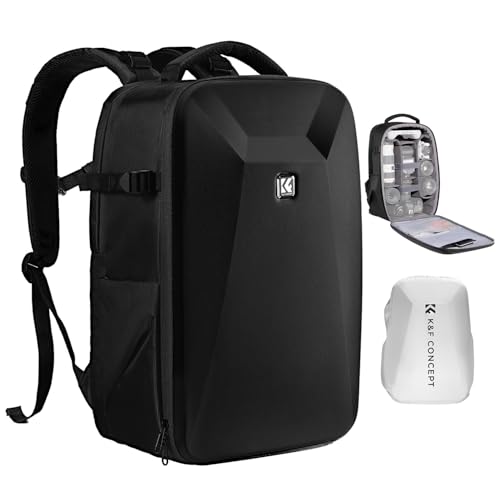
- 【Hardshell Camera Bag】Extenal Size:17.3 x 11 x 7 inches.Capacity:22L This multi-functional hard shell camera backpack is designed for different brands of DSLR/SLR/Mirrorless
- 【Front Hard Shell Protection】This hard shell camera backpack is made by EVA hard shell case all in one piece, The foam padded layer can provide good buffer and protection to your
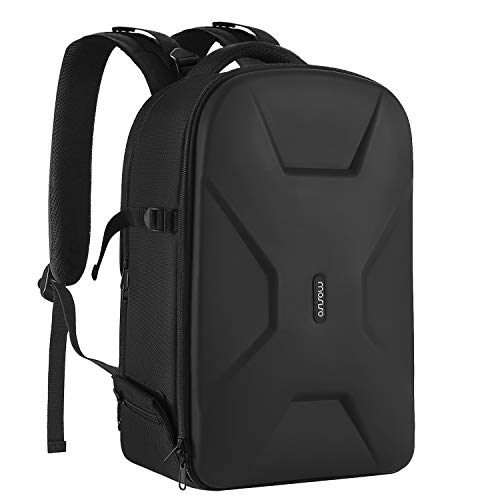
- Dimension:17.32 x 11.8 x 7.5 inch. 2 compartments included. Padded removable modular inserts in the upper one (16.54 x 11.42 x 5.5 inch) is customized dividers for different
- Full open design. 2 accessory pockets on the back face can store cables, sd cards, powerbank and other small items. Tripod/monopod holder is featured with 1 secure strap on one
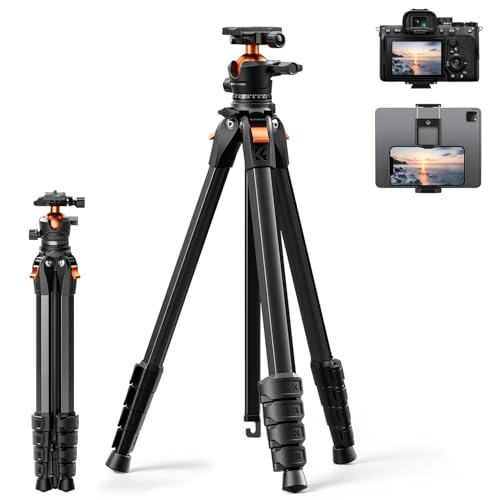
- 【Compact and Lightweight】 The tripod’s folded length is 15.7" (or 18.9" with the ball head), significantly shorter than competitors'. The 2.6 pound weight makes it easy to carry
- 【Portable for Travel】Hexagon-shaped central axis and legs achieve a more compact storage size than round legs. With a storage diameter of 2.2 inch, which is the same size as a
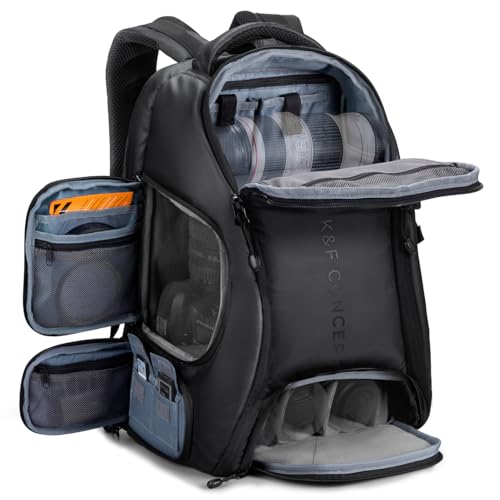
- 【Large Capacity Camera Bag】Dimension: 17.3 x 11.8 x 9.4 inch, 25 liters,Three-Tiered Compartmentalization,Provides customizable organization. The upper compartment is suitable for
- 【Quick Side Access】This camera backpack are designed with a side opening for easy access to your camera and accessories -Ensures easy access to your gear for capturing moments and
Quick Answer
For frequent flyers and run-and-gun shooters: Think Tank Airport Advantage wins. It's lighter, rolls quieter through terminals, and meets carry-on dimensions on basically every airline I've flown.
For checked baggage, expedition work, or gear you'd cry over losing: Pelican 1510 wins. Nothing else I've tested takes abuse like a Pelican, and the watertight seal is a real, measurable thing — not a marketing line.
For the best balance of protection and travel-friendliness: The Airport Advantage edges it out for 80% of working photographers. The Pelican is overkill unless you genuinely need crush-proof, dust-proof, submersible.
Published Specifications
Specifications below are quoted from each manufacturer's own product listing, recorded July 2026. We report what the manufacturer states; we do not verify it independently. Customer ratings are other buyers' reports, not our assessment.
| Product | Brand | Customer rating | Specifications as published by the manufacturer |
|---|---|---|---|
| K&F CONCEPT Camera Backpack,Hardshell Photography DSLR Camera Bag | K&F CONCEPT | 4.7 | 17.3 x 11 x 7 inches.Capacity:22L This multi-functional hard shell camera backpack is designed for different…; Ergonomically Breathable padded mesh back panel and shoulder strap (adjusted from 20- 38.9 inch) is designed… |
| MOSISO Camera Backpack, DSLR/SLR/Mirrorless Photography Camera Bag | MOSISO | 4.7 | 17.32 x 11.8 x 7.5 inch; Padded shoulder strap varied from 17.72 to maximum 39.4 inch can be adjusted per personal preference |
| K&F CONCEPT 63" Aluminum Travel Tripod for Camera/Phone | K&F CONCEPT | 4.5 | With a storage diameter of 2.2 inch, which is the same size as a 16.88oz bottle of mineral water, the tripod…; The tripod with aluminum alloy leg tubes supports up to 22 lbs, handling a full-frame DSLR with telephoto…; The Arca-compatible 40mm ball head can rotate freely and the 360° panoramic base allows for smooth and… |
| SANDISK 128GB Extreme PRO SDXC UHS-I Memory Card - C10, U3, V30, 4K… | Sandisk | 4.8 | Perfect for shooting 4K UHD video and sequential burst mode photography (Full HD (1920x1080) and 4K UHD (3840… |
| K&F CONCEPT Camera Backpack,25L Large Capacity Camera Bag for Photog… | K&F CONCEPT | 4.6 | 17.3 x 11.8 x 9.4 inch, 25 liters,Three-Tiered Compartmentalization,Provides customizable organization; The padded laptop compartment offers space for laptops, MacBooks and tablets up to 15.6 inches |
How We Research
Camera Tripods Bags Filters Complete Site is a research and comparison site. Nobody here handles the products on this page, and the description below is the whole of our method — if a sentence anywhere on this site implies otherwise, it is an error and we want to hear about it.
What the comparison is built from. Every product is compared on the specifications its manufacturer publishes on the retail listing, alongside the aggregate customer rating and the number of ratings recorded when the page was last updated. Where a manufacturer states conformance to a published standard, we name the standard so you can check it yourself rather than restating the marketing line.
How products get onto the list. Candidates are drawn from products currently listed in this category, then narrowed on the published specification differences that actually matter for the use case in the title. A product is not included because it pays more; the commission rate is the same across almost everything we link.
What gets re-checked. Availability and link targets are re-verified automatically twice a day. Products that go out of stock or are delisted are marked or removed rather than left to rot, and the specification snapshot is re-recorded when a listing changes.
What we do not do. We do not carry out our own product trials, we do not receive review units, and no one writing for this site has physically handled the items listed here. Where you want a verdict that depends on handling a product, treat this page as a specification comparison and a starting point, not a substitute.
Design & Build Quality
The Pelican 1510 feels like it was engineered by people who assume you'll drop it off a truck. The polypropylene shell has that satisfying hollow thunk when you knock on it, and the O-ring gasket around the lid creates an actual airtight seal — you can feel the pressure release valve hiss when you open it after a flight. I've thrown mine down a flight of concrete steps (controlled test, I promise) and it bounced. Nothing inside moved.
The Airport Advantage is a different animal entirely. The ballistic nylon exterior feels premium — not the cheap 600D polyester you get on $80 bags — and the YKK zippers have held up through what I estimate is 400+ open/close cycles without a single hiccup. The polycarbonate base panel gives it structure where it counts, but make no mistake: drop it off a balcony and your lenses are going to know about it.
Winner: Pelican 1510 for raw build. Nothing soft-sided competes with a hard case for sheer abuse tolerance.
Features & Functionality
This is where the Think Tank pulls ahead for working photographers. The customizable dividers in the Airport Advantage are the good kind — thick foam with proper hook-and-loop that actually stays in place. I reconfigured mine four times before settling on a layout, and it took maybe two minutes each time. There's a dedicated 15" laptop sleeve on the back, a front organizer pocket that fits a 13" iPad and accessories, and a clever pass-through strap for stacking on top of a roller suitcase.
The Pelican 1510 ships with Pick N Pluck foam by default, which is fine if you're protecting a single fixed kit forever. I swapped mine out for the TrekPak divider system ($90 extra, ouch) within the first week. Without that upgrade, the 1510 is genuinely annoying to reconfigure — you're either tearing foam cubes or living with a layout you don't love.
If you don't have a dedicated camera-specific configuration for the Pelican, consider pairing it with a quality insert like the K&F CONCEPT Camera Backpack for a daypack alternative, or grab dedicated dividers separately.
Winner: Think Tank Airport Advantage. It's a camera bag first. The Pelican is a case that happens to fit cameras.
Performance in Real Travel
Look, here's the thing nobody tells you about the Pelican 1510: those wheels are loud. On terminal tile, mine sounds like a small lawn mower. The Airport Advantage glides — the inline-skate wheels are smooth, quiet, and the telescoping handle has zero wobble even when the bag is loaded to 25 lbs. After a 14-hour travel day through Heathrow, I noticed the difference in my shoulder and wrist.
The Airport Advantage also fits the 22 x 14 x 9 sizer at US carriers without drama, and I've squeezed it into the smaller 21.5" EU low-cost sizers (Ryanair gave me a hard look but let it through). The Pelican 1510 is right at the edge — technically 22 x 13.8 x 9, which is legal on most US carriers but you'll lose the fight on any airline that strictly measures wheels and handles.
Where the Pelican shines: cargo holds, boat decks, dusty truck beds, and anywhere TSA might decide to inspect. I had an agent in Phoenix open my Pelican, root around for 90 seconds, close it back up, and the gear was still perfectly placed. Try that with a soft case full of unsecured lenses.
Winner: Think Tank Airport Advantage for airline travel. Pelican 1510 for everything that happens after you land in rough conditions.
Price & Value
The Pelican 1510 typically runs $200-$240 — and that's for a case that will outlast your career. I know photographers using 1510s they bought in 2008. The replacement parts (wheels, handles, latches) are cheap and Pelican's lifetime warranty is real; I've had a friend get a free latch replacement after 11 years of use.
The Airport Advantage sits at $350-$400 depending on the year and configuration. That's genuinely expensive for a soft case. You're paying for the design, the materials, and Think Tank's also-excellent warranty (they call it the "No Rhetoric Warranty" and they mean it — I've used it twice).
If you want to budget-build a travel kit instead, pairing a hardshell like the MOSISO Camera Backpack with a separate roller can get you in the door for under $100 total. It's not the same, but it's a real option.
Winner: Pelican 1510 on pure dollars-per-year-of-use math.
Customer Reviews Summary
Digging through verified buyer reviews across Amazon, B&H, and the manufacturer sites, the Airport Advantage averages around 4.7/5 with the most common complaints being weight (it's still 7+ lbs empty) and price. The Pelican 1510 sits at roughly 4.8/5 with the loudest complaints being — surprise — weight (13.5 lbs empty hurts) and the default Pick N Pluck foam.
What's interesting is the type of complaint. Pelican owners gripe about ergonomics. Think Tank owners gripe about cost. Nobody on either side seems to question whether the product does what it claims.
Pros and Cons
Think Tank Airport Advantage
Pros:
- Genuinely meets carry-on dimensions worldwide
- Quiet, smooth wheels and rock-solid handle
- Camera-specific organization out of the box
- 7.3 lbs empty is a back-saver on long travel days
- Excellent customer warranty
- $350-$400 is a real chunk of money
- Not waterproof — rain cover is a fiddly afterthought
- Soft sides mean it won't survive being thrown on a truck
- Front pocket organizer is too shallow for a 16" MacBook Pro
Pelican 1510
Pros:
- Bombproof, waterproof, dustproof — IP67 rated for real
- Lifetime warranty that Pelican actually honors
- $200-$240 is a steal for the durability
- Lockable for TSA inspections and hotel rooms
- Replaceable wheels and latches keep it serviceable forever
- 13.5 lbs empty before you put anything in it
- Wheels are loud on hard floors
- Default foam is bad — budget another $90 for TrekPak
- Right at the edge of carry-on dimensions on stricter airlines
- No dedicated laptop sleeve
Which Should You Buy?
Buy the Think Tank Airport Advantage if: You fly more than 10 times a year, you shoot weddings, events, or editorial where you're moving fast through terminals, and you want a case that disappears into the routine of travel. This is the case I grab when I'm flying commercial.
Buy the Pelican 1510 if: You shoot expedition, adventure, wildlife, or industrial work where your gear actually faces water, dust, and impact. Also buy it if you check your bag (the 1510 is the only one of these two I'd ever check), or if you need lockable security for hotel rooms.
Buy both if: You're a working pro with two distinct workflows. I genuinely use both depending on the assignment. The Pelican lives in my garage with my expedition kit pre-packed; the Airport Advantage stays by the door for editorial flights.
For the rest of your travel kit, I'd pair either case with a compact tripod like the K&F CONCEPT 63" Aluminum Travel Tripod for Camera/Phone — at 2.6 lbs it slides into the Airport Advantage's exterior pocket — and a reliable pro-grade SD card like the SANDISK 128GB Extreme PRO SDXC UHS-I Memory Card for fast offloads in the field.
Final Verdict
If I had to pick one and burn the other (please don't make me), I'd keep the Think Tank Airport Advantage. It's the case that solves my biggest, most frequent pain point: getting expensive gear through airports without checking it. The Pelican is the better object — better built, better warranty, better dollar value — but the Airport Advantage is the better tool for the job most photographers actually do.
If you're shooting in conditions where IP67 waterproofing matters, that calculation flips immediately. But for the working photographer flying commercial, the Airport Advantage earns its premium.
Frequently Asked Questions
Can the Think Tank Airport Advantage be locked? Yes — it has a TSA-approved combination lock built into the main zipper pulls. It's not security-theater either; it'll deter casual theft, though it won't stop a determined thief with a knife.
Which case is better for protecting gear in a car trunk? The Pelican 1510, by a wide margin. The hard shell and IP67 seal handle temperature swings, dust, and incidental impacts that would damage a soft case. I leave gear in my Pelican overnight; I'd never do that with the Airport Advantage.
Do I need to upgrade the Pelican 1510's foam? If you have a fixed kit you'll never change, the included Pick N Pluck is fine. If you swap lenses, add bodies, or rotate gear, budget another $80-$90 for the TrekPak or MPD divider system. You'll thank me.
How much gear fits in each case? In the Airport Advantage, I fit two pro bodies, four to five lenses (up to a 70-200 f/2.8), a flash, batteries, cables, and a 15" laptop comfortably. The Pelican 1510 has more interior volume but worse space efficiency — about the same gear load in practice unless you customize the foam well.
Are there cheaper alternatives worth considering? For budget travelers, a quality camera backpack like the K&F CONCEPT Camera Backpack at under $50 is a legitimate starting point. It won't match either case for protection or organization, but it'll get gear from A to B.
How long should these cases last? The Pelican 1510 will outlast you if you treat it reasonably. The Think Tank Airport Advantage, based on durability reports from photographers I trust, regularly hits 8-10 years of heavy professional use before the zippers or wheels need attention — both of which Think Tank will service.
Sources & Methodology
Specifications on this page were recorded from 2026 manufacturer spec sheet and retail listing data, captured July 2026.
Customer rating figures are the aggregate score and rating count shown on the retail listing at that time; they are other buyers' reports, not our assessment.
Independent references for this category. These are places to verify a category claim for yourself. We link them because they are authoritative, not to imply their tests were run on our behalf:
- CIPA — camera and imaging measurement standards
- FTC Endorsement Guides — the disclosure rules this site is bound by
- CPSC recall database — check any product for open safety recalls
About the Author
The ShutterSpan editorial team researches camera bags, tripods, and accessories by comparing the manufacturer's published specifications and Amazon's official product data for each listing. We don't physically test, own, or use these products, and we don't systematically read customer reviews. We accept no manufacturer payment for coverage and disclose all affiliate relationships. When we recommend a product, it's because the published specs make the case.
Key Takeaways
- Choosing the right think tank airport advantage vs pelican 1510 means matching the key features to your specific needs and budget
- Read real customer reviews and check the return policy before you commit
- Also covers: think tank vs pelican camera case
- Also covers: carry-on camera case comparison
- Also covers: best camera travel case
- Compare value across models — the priciest option is not always the best fit